

Why Do Glasses Have Different Lens Shapes?
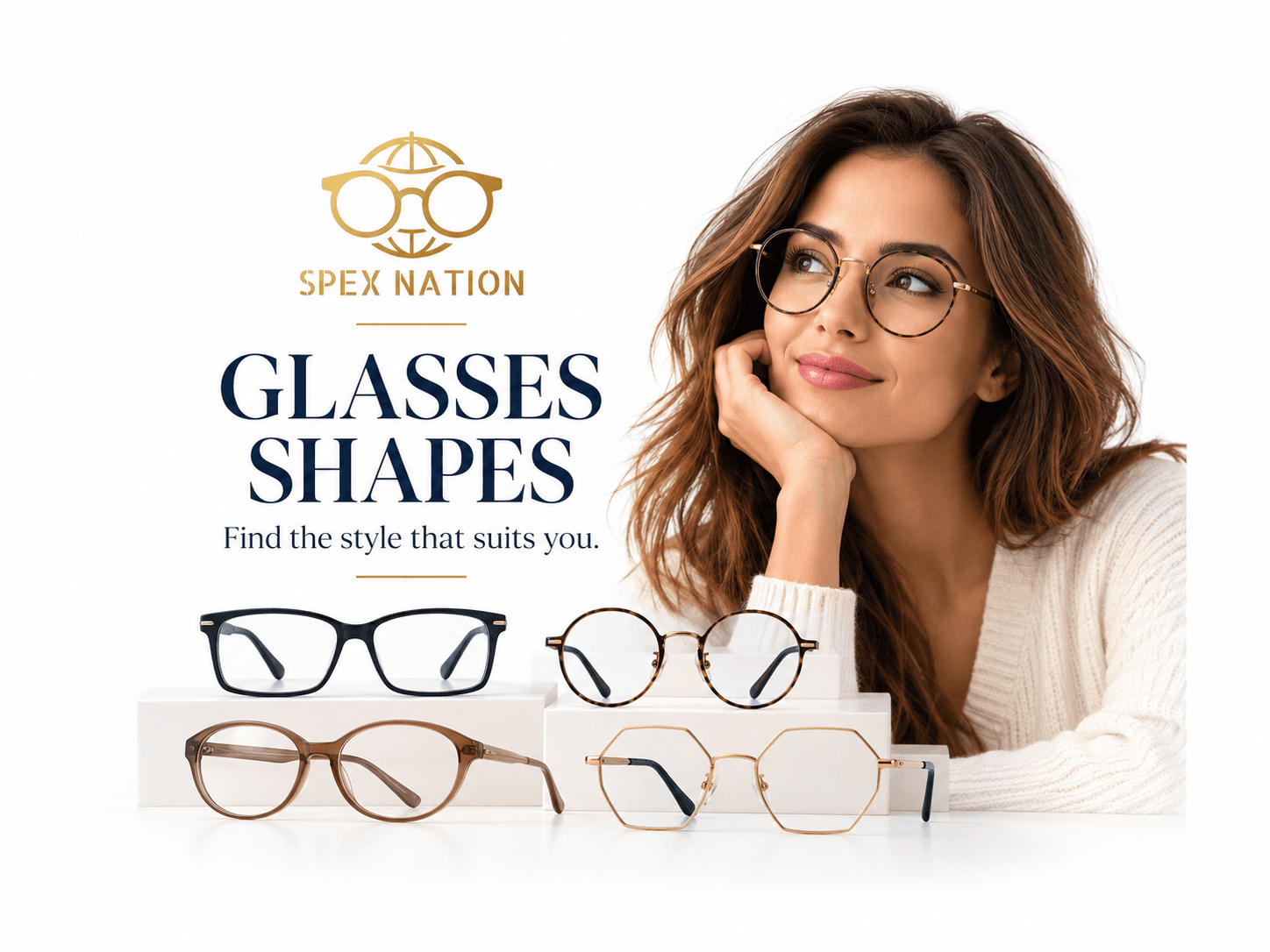
Why Do Glasses Have Different Lens Shapes? A Guide to Choosing the Right Style
Have you ever wondered why some glasses have perfectly round lenses while others are rectangular, square or even hexagonal?
At first glance, lens shape might seem like nothing more than a fashion choice. However, the shape of your glasses can influence much more than your appearance.
From how your prescription lenses are manufactured to their thickness, weight and overall comfort, the shape of a frame can make a surprising difference.
Let's explore the most popular glasses shapes and what makes each one unique.
1. Round Glasses: The Timeless Classic
Round glasses have been popular for generations, and their distinctive circular design continues to appeal to people looking for something a little different.
Their smooth, curved shape creates a softer appearance compared with angular frames.
Round frames are often associated with vintage fashion, creativity and understated sophistication.
What makes round glasses interesting?
Beyond their appearance, smaller round frames can sometimes be particularly suitable for stronger prescriptions.
This is because prescription lenses are often thicker towards their edges in short-sighted prescriptions. A smaller, well-centred frame can reduce the amount of lens material required.
However, the final thickness depends on several factors, including prescription strength, lens material and how the frame sits relative to your pupils.
2. Rectangular Glasses: Practical and Versatile
Rectangular glasses are among the most recognisable eyewear designs.
Their horizontal shape creates a structured appearance and can work particularly well for people who prefer a subtle, professional style.
They are frequently seen in everyday prescription eyewear because of their versatility.
Why choose rectangular glasses?
Clean, understated appearance
Suitable for casual and professional settings
Available in a wide variety of frame materials
Often provide a relatively compact lens area
One consideration is the vertical depth of the lens.
Some narrow rectangular frames offer less vertical viewing area than deeper designs, which may influence comfort for certain activities.
3. Square Glasses: Bold and Contemporary
Square glasses make a stronger visual statement.
Their angular corners and relatively balanced height and width create a distinctive, modern appearance.
Square frames can range from minimalist metal designs to bold acetate styles.
What makes square frames different?
Larger square frames may require more lens material than smaller designs.
For people with stronger prescriptions, this can sometimes mean thicker or heavier lenses, particularly around the outer edges in short-sighted prescriptions.
Choosing a suitable lens index and frame size can help manage the finished appearance.
4. Oval Glasses: Subtle and Elegant
Oval frames sit somewhere between round and rectangular designs.
Their gently elongated shape creates a softer appearance without being completely circular.
They can be a good option for someone who wants a classic design that feels less angular than rectangular or square glasses.
Oval frames are available in both metal and plastic designs, making them suitable for a wide range of personal styles.
Their relatively compact proportions can also be beneficial when considering lens thickness, depending on the prescription and frame measurements.
5. Geometric Glasses: Something Different
Not all glasses follow traditional shapes.
Hexagonal, octagonal and other geometric frames have become increasingly recognisable in contemporary eyewear.
These designs use unusual angles to create a distinctive look.
Why are geometric frames popular?
They offer a way to make prescription glasses a more noticeable part of your personal style.
Some geometric designs combine thin metal rims with subtle angles, creating an interesting appearance without looking excessively bold.
However, unusual frame shapes can sometimes require more careful consideration when fitting prescription lenses.
The position of the optical centre, frame dimensions and prescription all influence the final result.
6. Does Lens Shape Affect Thickness?
Yes, and this is one of the most overlooked aspects of choosing glasses.
Prescription lenses are not equally thick across their entire surface.
For short-sighted prescriptions, known as minus prescriptions, lenses are generally thinner in the centre and thicker towards the edges.
For long-sighted prescriptions, known as plus prescriptions, the opposite is generally true: lenses are thicker in the centre and thinner towards the edges.
The size and shape of a frame influence how much lens material is needed.
For example, a large rectangular frame may produce noticeably thicker edges in a strong minus prescription than a smaller, well-centred round frame.
However, shape alone doesn't determine thickness. The prescription, lens index, frame size and pupil position are all important.
7. Does Lens Shape Affect Your Vision?
For most people wearing properly fitted single-vision prescription glasses, different lens shapes can provide equally clear vision.
However, frame dimensions influence the available viewing area.
Larger lenses provide a wider physical lens area, while smaller designs may be lighter and more compact.
The position of the lenses relative to your eyes also matters.
Accurate prescription measurements, including pupillary distance, help ensure that your lenses are positioned appropriately.
For stronger prescriptions, frame selection can become particularly important because looking through areas away from the optical centre may introduce greater optical effects.
8. Are Bigger Glasses Always Better?
Not necessarily.
Oversized glasses can look fashionable, but larger frames are not automatically more comfortable or optically suitable.
Larger lenses may increase weight and thickness, particularly with stronger prescriptions.
On the other hand, very small frames may provide a more restricted viewing area.
The best choice is usually a balance between appearance, prescription suitability, fit and personal preference.
9. How to Choose the Right Lens Shape
Rather than choosing glasses purely because a particular style is fashionable, consider how you intend to wear them.
For everyday use, comfort and practicality are important.
For professional settings, you might prefer a subtle rectangular or oval design.
If you enjoy distinctive fashion, round or geometric frames may appeal to you.
And if you have a stronger prescription, paying attention to the overall frame dimensions can help manage lens thickness.
One useful approach is to compare the measurements of a pair of glasses you already wear comfortably with those of a new frame.
Remember that two frames with similar measurements can still fit differently because of their construction and shape.
10. Does Lens Material Matter Too?
Absolutely.
The material used to manufacture your prescription lenses can influence their thickness and weight.
Higher-index lens materials generally allow thinner lenses for a given prescription and frame design, although the amount of improvement varies.
At SpexNation, we offer single-vision prescription lenses in different indices, including:
1.5 index lenses
1.6 index lenses
1.67 index lenses
The most suitable option depends on your prescription and the frame you choose.
A thinner lens material can be particularly useful when combined with a larger frame or a stronger prescription.
Finding Your Perfect Pair at SpexNation
The shape of your glasses is about more than following the latest trends.
It influences how your frames look, how your prescription lenses are manufactured and how comfortable your glasses may feel throughout the day.
Whether you prefer classic round frames, understated rectangular designs or something more distinctive, understanding the differences can help you make a more informed choice.
At SpexNation, you can explore a wide selection of frames and single-vision prescription lens options to find eyewear that suits your style and visual needs.
Discover your next pair of prescription glasses at SpexNation, where style meets everyday practicality.