

What Is Anti-Glare Coating and Is It Worth It?
What Is Anti-Glare Coating and Is It Worth It?
You've probably seen anti-glare coating offered when buying new glasses. But what does it actually do, and is it something you really need?
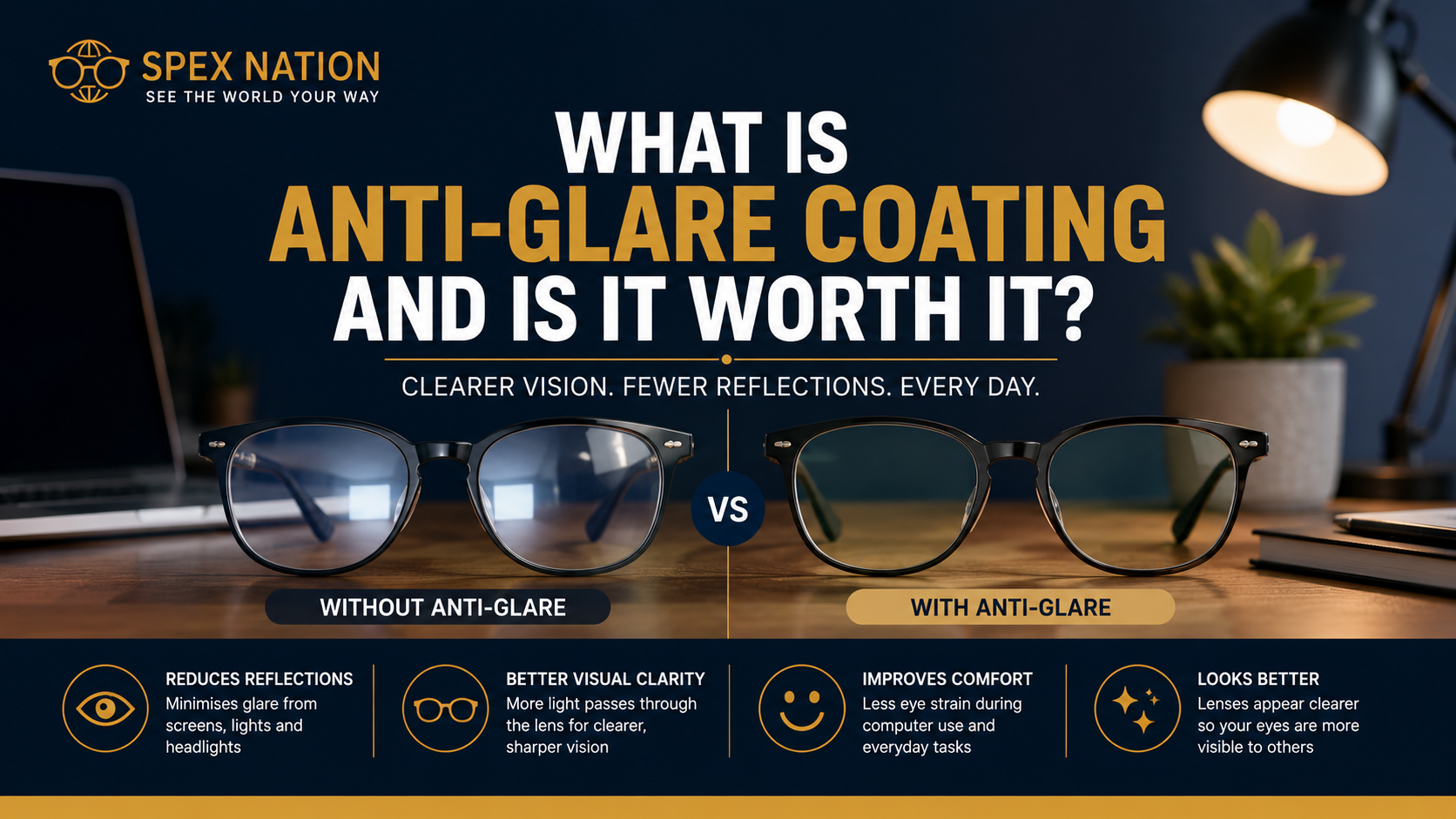
Anti-glare coating, also known as anti-reflective coating, is applied to spectacle lenses to reduce unwanted reflections from the lens surfaces.
The result is a lens that can appear clearer and more transparent.
What Causes Reflections on Glasses?
Light doesn't simply pass straight through a spectacle lens. Some light is reflected from the front and back surfaces.
You may notice these reflections when:
• Driving at night
• Working under bright indoor lighting
• Using a computer
• Having your photograph taken
• Speaking to someone under strong lights
The reflections can sometimes be distracting to the wearer and may also make the lenses more noticeable to other people.
How Does Anti-Glare Coating Work?
An anti-glare coating is made up of very thin layers applied to the lens surface.
These layers are designed to reduce the amount of visible light reflected from the lens.
More light can pass through the lens rather than reflecting from its surfaces.
This is why anti-glare lenses often look clearer when compared with standard uncoated lenses.
Does Anti-Glare Coating Improve Vision?
Anti-glare coating doesn't change your glasses prescription.
However, reducing lens reflections may improve visual comfort and the perceived clarity of vision in certain situations.
Many wearers particularly appreciate anti-glare lenses when driving at night or working in environments with artificial lighting.
Is Anti-Glare Good for Night Driving?
Headlights, streetlights and illuminated signs can create reflections on spectacle lenses.
An anti-glare coating may reduce reflections from the lens surfaces, which some people find more comfortable when driving in low-light conditions.
It's important to remember that anti-glare coating doesn't treat an underlying eye condition or replace an up-to-date prescription.
If you're experiencing significant problems with night vision, you should arrange an eye examination.
What About Computer Use?
Office lighting and digital screens can create reflections on glasses.
Reducing these reflections can make the lenses feel more comfortable during prolonged computer use.
Anti-glare coating is different from blue light filtering. The two are designed for different purposes, although some lens options may combine several coatings or features.
Do Anti-Glare Lenses Look Better?
This is one of the biggest reasons people choose them.
Standard lenses can show bright reflections that partially hide the eyes.
Anti-glare lenses tend to appear more transparent, allowing your eyes to be seen more clearly.
This can be particularly noticeable during:
• Video calls
• Photography
• Meetings
• Social occasions
Are There Any Downsides?
Anti-glare lenses still need to be cleaned properly.
Smudges and fingerprints may sometimes be more noticeable on a very clear lens surface.
A good cleaning routine and a clean microfibre cloth can help keep the lenses clear.
You should also avoid using harsh household cleaning products on spectacle lenses, as these may affect lens coatings.
Who Should Consider Anti-Glare Coating?
Anti-glare coating may be worth considering if you:
• Drive regularly at night
• Spend long periods using a computer
• Work under artificial lighting
• Regularly attend video meetings
• Prefer lenses with fewer visible reflections
• Want your glasses to have a clearer appearance
Is Anti-Glare Coating Worth the Extra Cost?
For someone who wears glasses throughout the day, anti-glare coating is one of the lens upgrades that can be noticed regularly rather than only in occasional situations.
It won't change the strength of your prescription, but fewer visible reflections and clearer-looking lenses are reasons many spectacle wearers choose it.
Think about where you wear your glasses most. If the answer is driving, the office, in front of screens or under bright lighting, anti-glare coating may be a useful addition to your next pair.