
Signs You Might Need Glasses
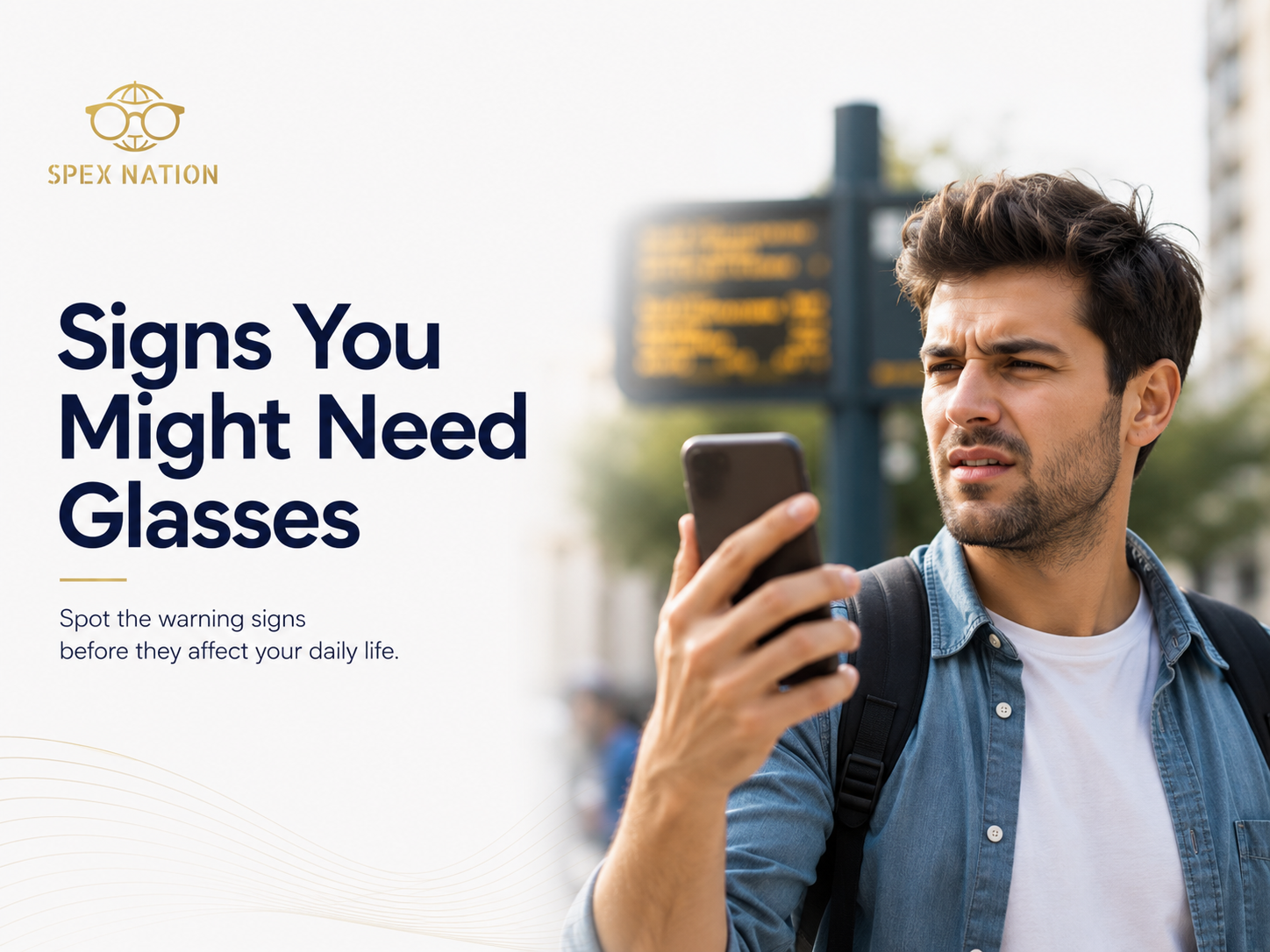
# Signs You Might Need Glasses
Many people don't realise their eyesight has gradually changed until everyday tasks become more difficult. Because vision often changes slowly, your brain adapts, making it easy to ignore the early warning signs.
If you've been wondering whether you need glasses, here are ten common symptoms that shouldn't be ignored.
## 1. Blurred Vision
One of the clearest signs you may need glasses is blurred vision.
You might notice that:
- Road signs are difficult to read.
- TV subtitles aren't as sharp as they used to be.
- Faces appear blurry from a distance.
- Small print is becoming harder to focus on.
If objects no longer appear crisp and clear, it's worth arranging an eye examination.
## 2. Frequent Headaches
Eye strain caused by uncorrected vision problems can sometimes contribute to headaches.
This is especially common after:
- Reading
- Using a computer
- Driving
- Studying
While headaches have many possible causes, your eyesight should always be checked if they're becoming more frequent.
## 3. Squinting to See Clearly
Do you find yourself narrowing your eyes to bring objects into focus?
Squinting temporarily changes how light enters the eye, making images appear slightly clearer. If you're doing this regularly, your prescription may have changed.
## 4. Difficulty Driving at Night
Many people first notice vision problems while driving after dark.
Common signs include:
- Glare from headlights.
- Halos around lights.
- Difficulty reading road signs.
- Reduced confidence driving at night.
These symptoms should never be ignored.
## 5. Holding Your Phone Further Away
If you're stretching your arms to read your phone or a menu, you may be developing age-related reading changes known as presbyopia.
This commonly begins in your 40s.
## 6. Tired or Aching Eyes
Eyes that regularly feel tired after reading or using digital devices could indicate that your eyes are working harder than they should.
Although screen use can contribute to eye strain, an outdated prescription can make the problem worse.
## 7. Double Vision
Occasional double vision should always be investigated promptly.
In some cases it may simply relate to your prescription, but it can also indicate more serious eye or health conditions.
If you develop sudden or persistent double vision, seek professional advice without delay.
## 8. You Keep Increasing the Font Size
If you've gradually increased the text size on your phone, tablet or computer, it could be a sign that your near vision has changed.
Many people don't realise how much they've adjusted until someone else uses their device.
## 9. You Haven't Had an Eye Test for Years
Even if you think your vision is fine, regular eye examinations remain important.
Eye tests don't just check your prescription—they can also detect many eye conditions before symptoms develop.
## 10. Friends or Family Have Noticed
Sometimes the people around you notice changes before you do.
They may mention that you're:
- Sitting closer to the TV.
- Holding reading material unusually close.
- Squinting frequently.
- Missing details in the distance.
It's worth taking these observations seriously.
## When Should You Book an Eye Test?
Arrange an eye examination if you've noticed any of these symptoms or if your current glasses no longer seem as effective as they once were.
Regular eye tests help ensure you're seeing as clearly as possible while also checking the overall health of your eyes.
## The Bottom Line
Vision changes are often gradual, making them easy to overlook. Fortunately, many problems can be corrected simply with the right pair of prescription glasses.
If you've recognised several of the signs in this guide, it may be time for an eye examination.
Once you have an up-to-date prescription, SpexNation offers a wide range of stylish prescription glasses with quality lenses included, helping you enjoy clear, comfortable vision every day.