

Prescription Sunglasses for Running, Cycling and Walking: What Should You Look For?
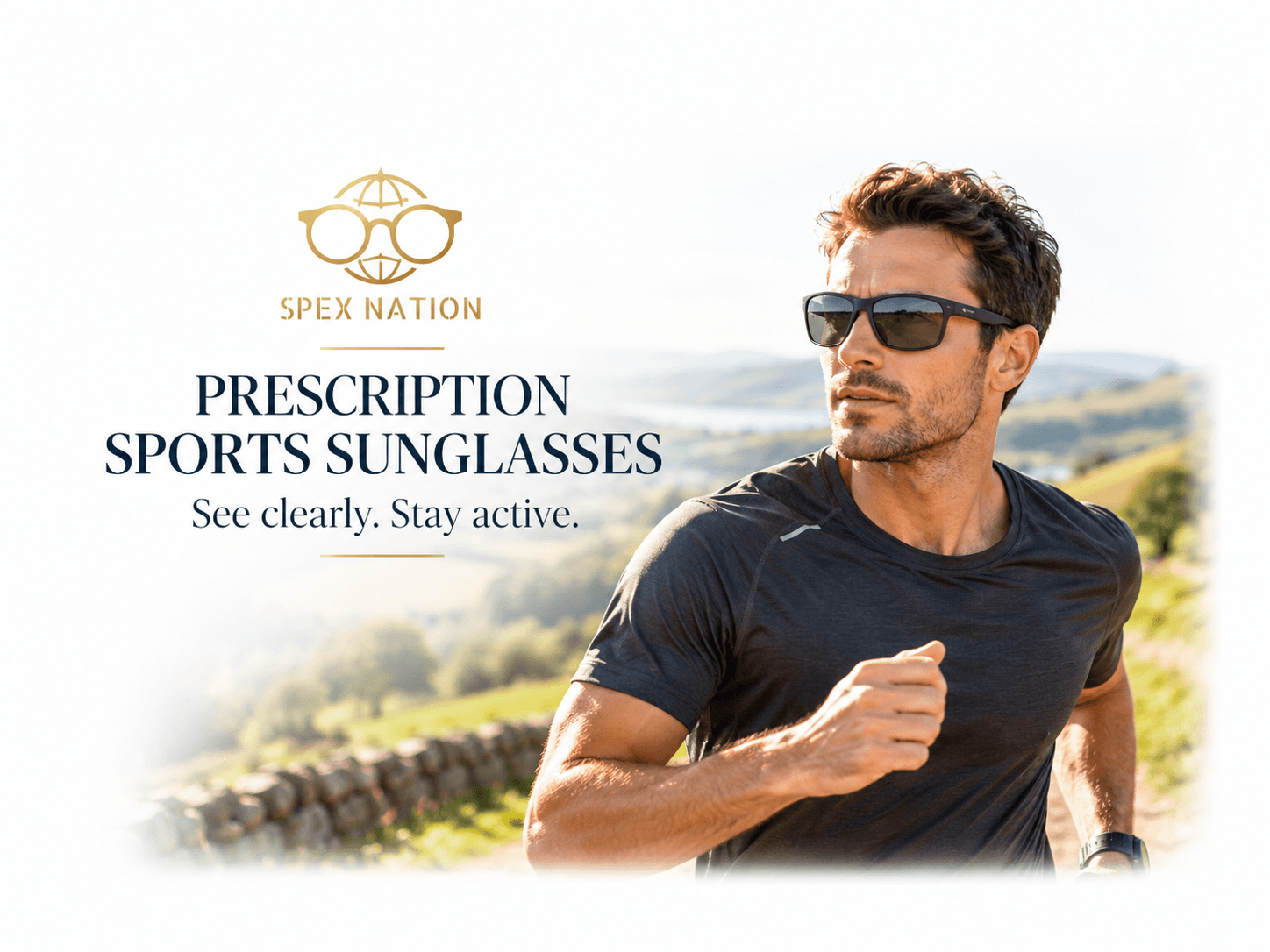
Prescription Sunglasses for Running, Cycling and Walking: What Should You Look For?
Whether you're heading out for a morning run, cycling through the countryside or enjoying a weekend walk, clear and comfortable vision can make outdoor activities much more enjoyable.
For people who wear prescription glasses, ordinary sunglasses aren't always practical. Switching between glasses and sunglasses can be inconvenient, while going without your prescription may compromise visual clarity.
That's where prescription sunglasses come in.
And with growing interest in activity-specific eyewear in 2026, more people are discovering how the right pair can combine everyday vision correction with protection from bright sunlight.
Why Are Prescription Sports Sunglasses Becoming More Popular?
Eyewear is increasingly being chosen for specific activities rather than simply for everyday wear.
According to the 2026 UK Eyewear Salience Index, searches for prescription running sunglasses increased by 26.2% year on year, while searches for hiking sunglasses rose by 48.9%.
This reflects growing interest in eyewear that suits active lifestyles.
Prescription sunglasses offer a practical combination of clear vision and sun protection, whether you're walking, running or enjoying outdoor leisure activities.
However, not every pair of sunglasses is suitable for every sport, and some specialist sports frames cannot accommodate conventional prescription lenses.
1. UV Protection Should Come First
When choosing sunglasses for outdoor activities, UV protection is one of the most important considerations.
Ultraviolet radiation from the sun can contribute to eye damage over time, including cataracts and certain conditions affecting the surface of the eye.
Look for sunglasses offering UV400 protection or protection against 99–100% of UVA and UVB radiation.
Importantly, darker lenses don't automatically provide better UV protection.
A lightly tinted lens with appropriate UV protection can offer better protection against ultraviolet radiation than a dark lens without an adequate UV filter.
2. Choose the Right Lens Tint
Different lens colours can influence how the world appears through your sunglasses.
Grey lenses
Grey is a popular choice for general outdoor use because it reduces overall brightness while maintaining relatively natural colour perception.
Brown lenses
Brown tints can enhance perceived contrast in some environments, making them appealing for certain outdoor activities.
Green lenses
Green tints can provide comfortable brightness reduction while preserving relatively balanced colour perception.
The best tint depends on your preferences, the lighting conditions and the activity you're undertaking.
For most everyday outdoor activities, a neutral grey or brown tint is a practical starting point.
3. Frame Fit Matters More Than You Think
When you're moving, poorly fitting sunglasses can quickly become frustrating.
A frame that repeatedly slides down your nose may distract you during a run or cycle ride.
Look for sunglasses that:
Sit securely without excessive pressure
Feel comfortable around your nose and ears
Remain reasonably stable during movement
Don't obstruct your peripheral awareness unnecessarily
Feel balanced rather than front-heavy
For more demanding sporting activities, specialist sports frames with enhanced grip or retention systems may be more suitable than conventional fashion sunglasses.
4. Are Wraparound Sunglasses Better for Sport?
Wraparound sunglasses are popular among cyclists and runners because their curved shape can provide additional coverage around the sides of the eyes.
This may help reduce exposure to wind, dust and sunlight entering from the side.
However, there's an important consideration for prescription wearers.
Highly curved frames can be more difficult to glaze with conventional prescription lenses.
Depending on the prescription, specialist lens designs or manufacturing techniques may be necessary.
This means not every wraparound frame is suitable for prescription lenses.
If you're buying prescription sunglasses online, always check whether the chosen frame supports your prescription.
5. Prescription Sunglasses for Running
Running involves repeated movement, making comfort and stability particularly important.
A lightweight frame with a secure fit can help reduce distractions.
Consider the conditions in which you normally run.
For bright daytime running, suitable tinted prescription sunglasses can help reduce discomfort from sunlight.
For running in changing light, it's important to consider whether the lens tint will remain appropriate throughout your route.
Avoid very dark lenses in low-light conditions.
6. Prescription Sunglasses for Cycling
Cyclists often spend extended periods outdoors, sometimes travelling through rapidly changing lighting conditions.
Clear distance vision is important for identifying road signs, obstacles and other road users.
Sunglasses can also help shield the eyes from wind and airborne particles.
When choosing prescription sunglasses for cycling, consider:
Clear and accurate distance vision
Suitable lens tint for expected lighting conditions
Comfortable compatibility with your helmet
Adequate field of view
Secure fit during movement
For competitive cycling or demanding environments, specialist sports eyewear may offer advantages over conventional prescription sunglasses.
7. Prescription Sunglasses for Walking and Hiking
Walking and hiking are activities where everyday prescription sunglasses can be particularly useful.
Unlike high-impact sports, casual walking generally doesn't require highly specialised eyewear.
A comfortable frame with appropriate UV protection may be sufficient for many people.
For longer walks, lightweight frames can help improve comfort.
If you're walking through areas with alternating shade and bright sunlight, consider how your chosen lens tint performs in different lighting conditions.
8. What About Photochromic Lenses?
Photochromic lenses change their tint in response to light conditions, generally becoming darker outdoors and returning towards a clearer state indoors.
They can be convenient for people who frequently move between indoor and outdoor environments.
However, their performance varies depending on the lens technology, temperature and available UV light.
Many conventional photochromic lenses don't darken as strongly behind a car windscreen because the glass blocks much of the ultraviolet radiation that activates them.
Specialist photochromic technologies may behave differently.
At SpexNation, eligible single-vision prescriptions can be combined with selected photochromic lens options.
9. Do You Need Thinner Lenses for Sports Sunglasses?
Not necessarily, but lens thickness and weight can influence comfort.
Higher prescriptions may produce thicker lenses, particularly in larger frames.
Higher-index lens materials can reduce thickness in suitable prescriptions, although the finished result also depends on frame size, lens shape and prescription strength.
Choosing an appropriately sized frame is often just as important as selecting the lens material.
10. Can You Wear Prescription Sunglasses Every Day?
Absolutely.
Prescription sunglasses aren't limited to sporting activities.
They can be useful for driving in appropriate daylight conditions, walking, travelling, gardening and many other outdoor activities.
The key is choosing a frame and lens combination suited to how you intend to use them.
Remember that dark sunglasses shouldn't be worn for driving at night, and lens suitability should always be considered for changing visibility conditions.
Choosing Prescription Sunglasses at SpexNation
At SpexNation, we believe that clear vision and personal style should work together.
Our range of prescription-compatible sunglasses allows eligible customers to add single-vision prescription lenses to selected frames.
Whether you're looking for sunglasses for everyday walks, holidays or general outdoor activities, choosing the right frame and lens combination can make a real difference.
For specialist or high-impact sports, dedicated protective eyewear may be more appropriate.
Explore prescription sunglasses at SpexNation and discover eyewear designed to bring together clear vision, sun protection and everyday style.