

How Long Does It Take to Adjust to New Glasses?
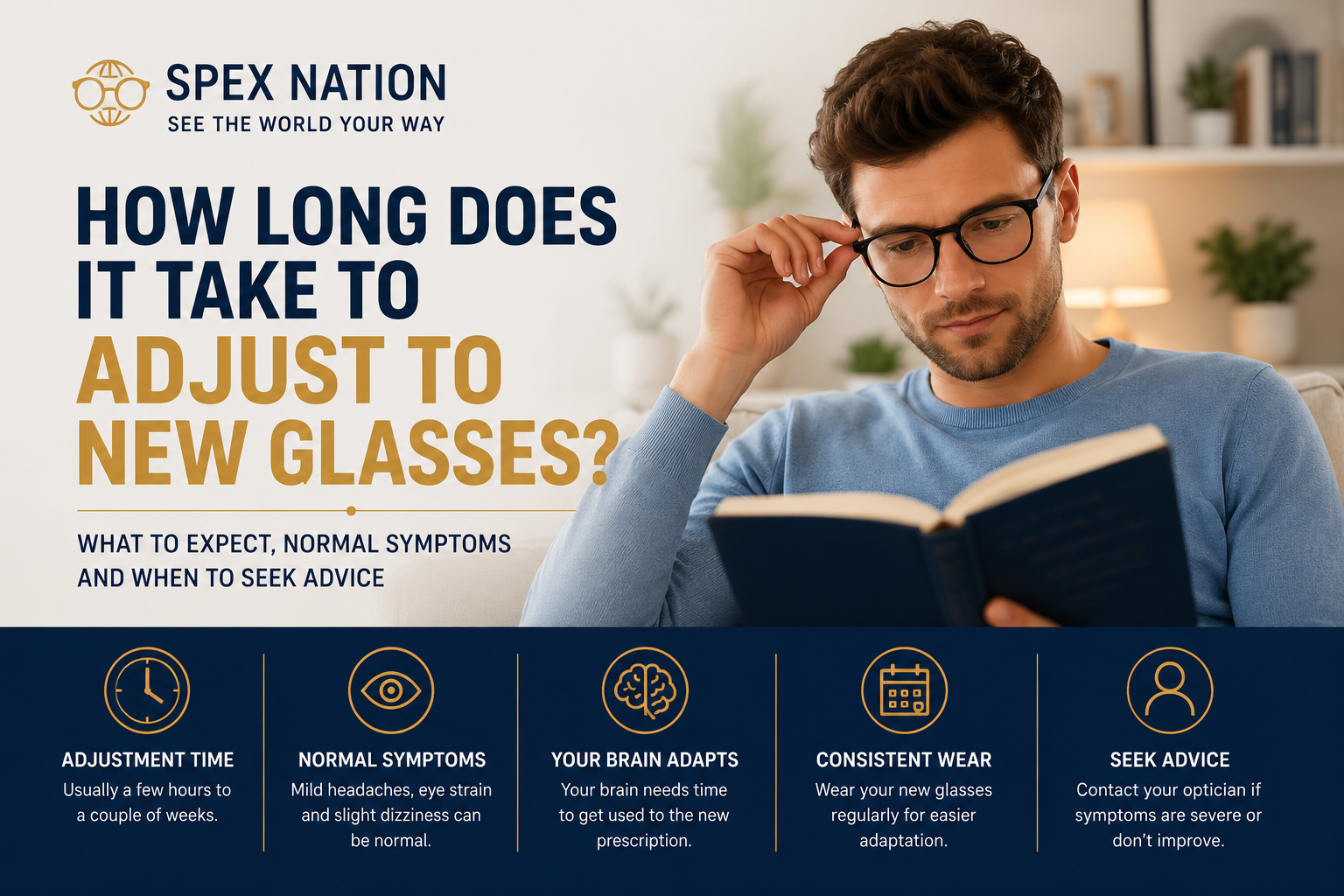
How Long Does It Take to Adjust to New Glasses?
Putting on a new pair of glasses can sometimes feel surprisingly strange.
Your vision may be clearer, yet the floor looks slightly different. Objects might appear closer or further away, and you may even notice mild eye strain or a headache.
For most people, this doesn't mean there's a problem with the glasses. Your eyes and brain may simply need time to adapt.
How Long Does It Usually Take?
Many people feel comfortable with new glasses within a few hours or days.
For a more noticeable prescription change, adaptation can take longer. In some cases, it may take up to around two weeks before the glasses feel completely natural.
There isn't one exact adjustment time for everyone. It depends on your prescription, your previous glasses and the type of correction you now have.
Why Do New Glasses Feel Strange?
Glasses change the way light is focused before it reaches your eyes.
Your brain then interprets the visual information it receives.
If you've been wearing the same prescription for a long time, your brain will have become accustomed to that particular view of the world. A new prescription can suddenly change the size, position or appearance of objects.
Your brain needs a little time to get used to the updated visual information.
What Symptoms Can Be Normal?
During the first few days, some people notice:
• Mild headaches
• Slight dizziness
• Eye strain
• Objects appearing closer or further away
• A strange feeling when walking
• Slight distortion at the edges of the lenses
These symptoms should generally become less noticeable as you continue wearing your glasses.
Why Astigmatism Changes Can Take Longer
If your astigmatism correction has changed, your new glasses may feel particularly unusual at first.
Lines can sometimes appear slightly tilted or the floor may seem uneven.
This is because cylinder and axis changes alter the way certain directions of blur are corrected.
The sensation can feel strange, but many people gradually adapt with consistent wear.
Does a Stronger Prescription Take Longer to Adjust To?
It can.
A significant change in prescription may create a more noticeable difference between your old and new glasses.
Higher prescriptions can also produce differences in image size and peripheral vision.
This doesn't automatically mean stronger glasses will take weeks to get used to, but the initial change may be more noticeable.
Should I Wear My New Glasses All Day?
In many cases, consistent wear is the easiest way to adapt.
Repeatedly changing between your old and new glasses can sometimes make the process more difficult because your brain is constantly switching between two different visual experiences.
If your optician has advised you to wear the new glasses regularly, try to give yourself a reasonable period of consistent use.
Check the Fit of Your Glasses Too
Not every problem with new glasses is caused by the prescription.
Poorly fitting frames can affect how the lenses sit in front of your eyes.
Glasses that constantly slide down your nose, sit unevenly or feel noticeably tilted may need adjusting.
A simple frame adjustment can sometimes make a significant difference to comfort.
When Should You Contact Your Optician?
You should seek advice sooner if you experience severe symptoms, sudden double vision or a significant reduction in vision.
It's also worth arranging a review if your glasses remain very uncomfortable or your symptoms aren't gradually improving after a reasonable adaptation period.
Don't feel that you have to struggle with glasses that continue to feel completely wrong.
Is It Normal to Notice Your New Prescription?
Yes.
A new prescription is designed to change the way you see, so noticing a difference isn't necessarily a bad sign.
The important thing is whether the strange sensation gradually improves.
For many wearers, there comes a point after a few days when they suddenly realise they haven't thought about their new glasses at all. That's usually when the adaptation period is over.