

High Index Lenses Explained: 1.5 vs 1.6 vs 1.67
High Index Lenses Explained: 1.5 vs 1.6 vs 1.67
When ordering prescription glasses, one of the most common questions people ask is whether they need thinner lenses.
If you've ever noticed that some glasses have thick edges while others appear slim and lightweight, the answer often comes down to lens index.
In this guide, we'll explain the differences between standard lenses, 1.6 lenses and 1.67 high-index lenses.
What Does Lens Index Mean?
Lens index refers to how efficiently a lens material bends light.
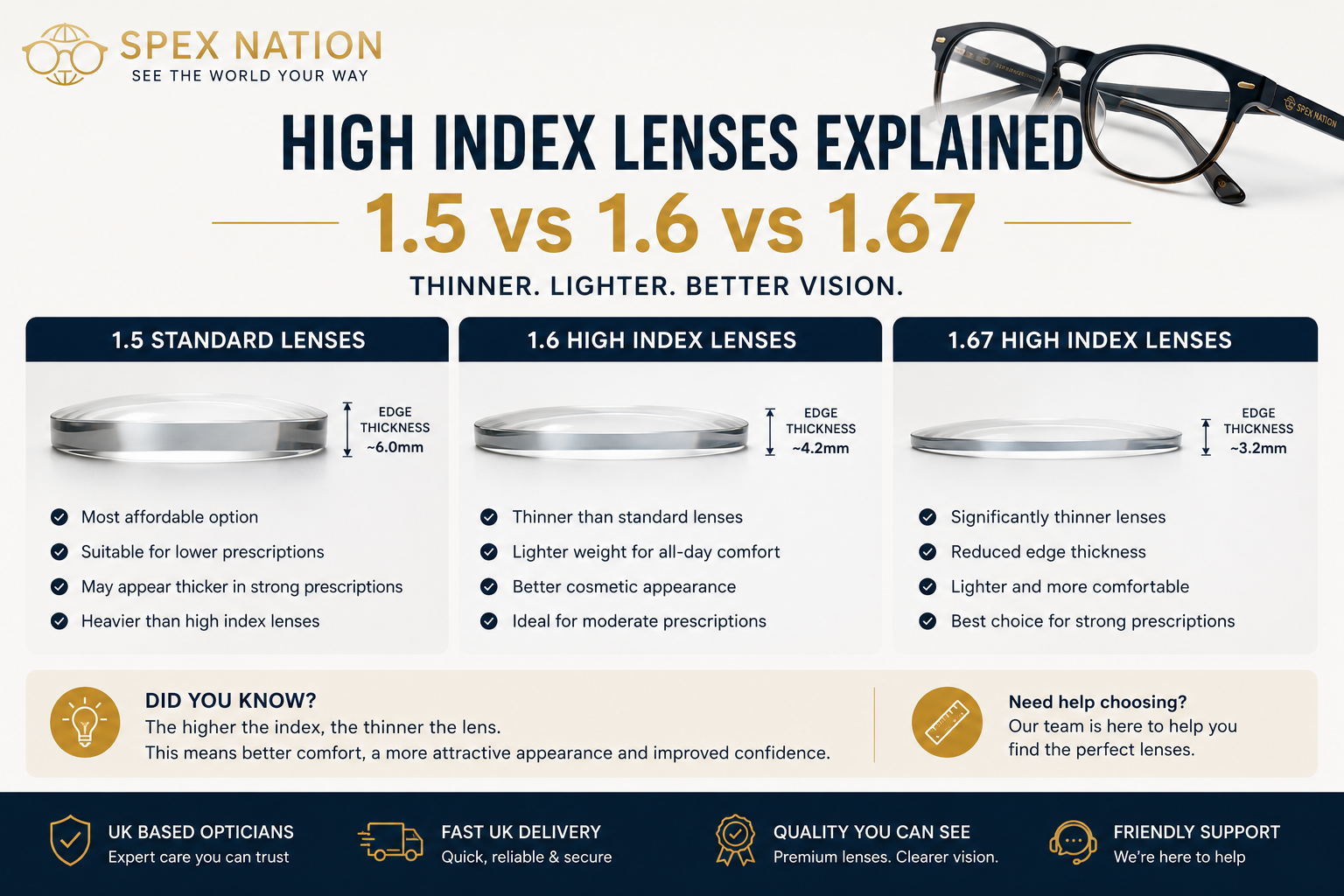
The higher the index, the thinner the lens can be made while providing the same prescription strength.
This means stronger prescriptions can often benefit from thinner, lighter and more attractive lenses.
Standard 1.5 Lenses
Standard lenses are suitable for many lower prescriptions.
Benefits
Most affordable option
Excellent optical clarity
Suitable for mild prescriptions
Considerations
As prescriptions become stronger, standard lenses can become noticeably thicker and heavier.
1.6 High Index Lenses
1.6 lenses are a popular upgrade and offer a good balance between thickness reduction and affordability.
Benefits
Thinner than standard lenses
Lighter weight
Improved cosmetic appearance
Suitable for many moderate prescriptions
Many wearers find that 1.6 lenses provide a more comfortable and stylish result.
1.67 High Index Lenses
1.67 lenses are designed for stronger prescriptions where lens thickness becomes more noticeable.
Benefits
Significantly thinner than standard lenses
Reduced edge thickness
Lighter weight
Better appearance in many frame styles
These lenses are particularly useful for higher prescriptions where standard lenses may look bulky.
Which Lens Thickness Do I Need?
As a general guide:
Standard Lenses
Often suitable for lower prescriptions.
1.6 Lenses
A great choice for moderate prescriptions and anyone looking for a thinner lens.
1.67 Lenses
Usually recommended for stronger prescriptions where minimising thickness is a priority.
Does Frame Choice Matter?
Yes.
Smaller frames generally help reduce lens thickness, while larger frames may increase the appearance of lens thickness.
Choosing the right combination of frame and lens material can significantly improve the final result.
Are High Index Lenses Worth It?
For many people, the answer is yes.
Benefits can include:
Improved comfort
Reduced weight
Better cosmetic appearance
More balanced glasses
The stronger your prescription, the more noticeable these benefits often become.
Final Thoughts
High-index lenses can make a significant difference to both the comfort and appearance of your glasses.
Whether you choose standard lenses, 1.6 lenses or 1.67 lenses, selecting the right option will help ensure you enjoy clear vision and comfortable wear every day.
At SpexNation, we offer a range of lens options to help you achieve the best balance of clarity, comfort and value.