

Audio Glasses: Could Glasses With Built-In Speakers Replace Your Earphones?
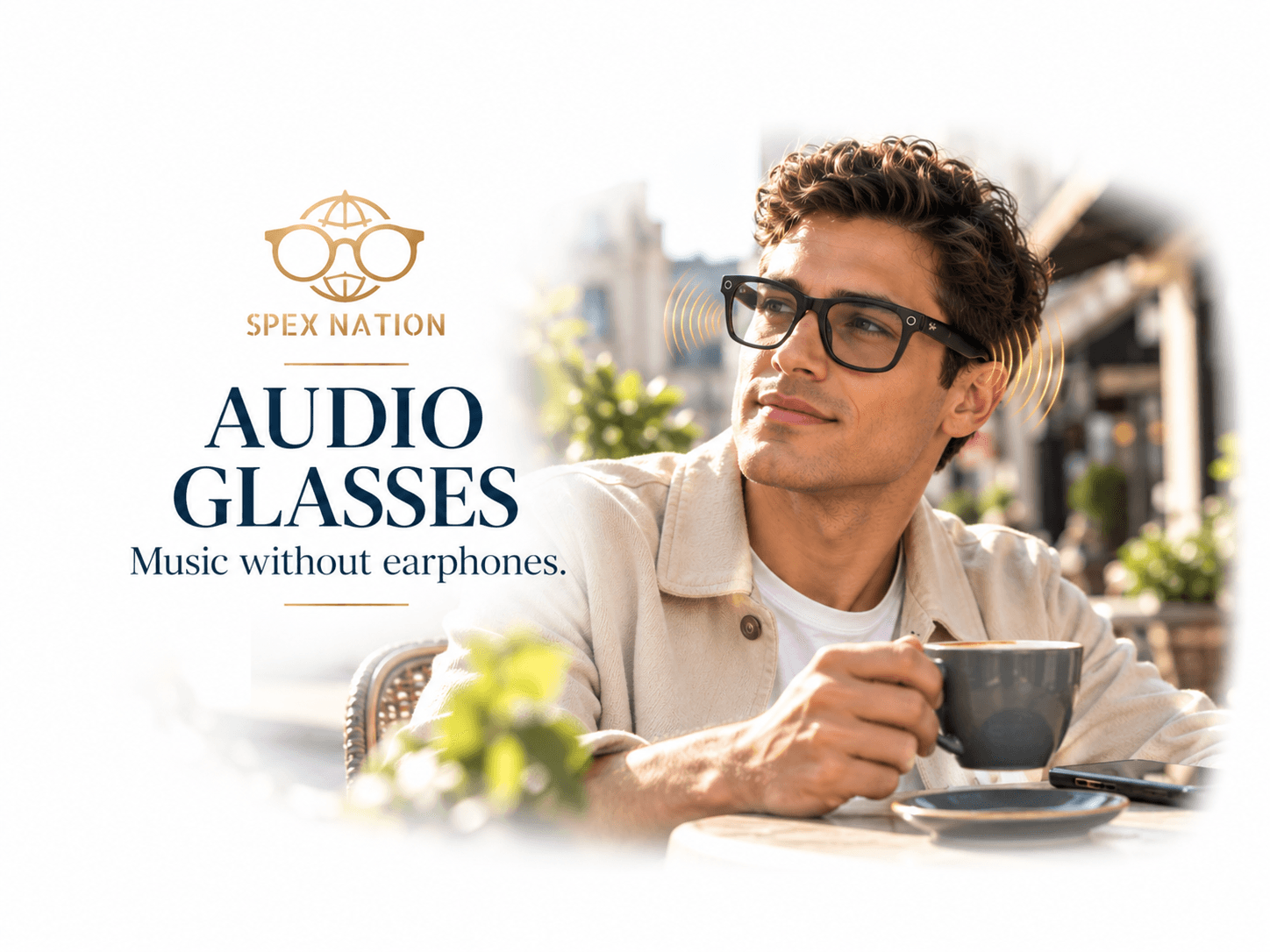
Imagine listening to your favourite podcast, answering a phone call or hearing directions while walking through town — all without wearing headphones or earbuds.
Instead, the sound comes directly from your glasses.
This is the idea behind audio glasses, a growing category of wearable technology that combines conventional-looking eyewear with miniature speakers.
Companies including Bose, Amazon and Meta have explored different versions of this technology, while other manufacturers continue developing audio-focused frames.
But how do glasses actually produce sound, and could they eventually replace traditional earphones?
1. What Are Audio Glasses?
Audio glasses are eyewear frames containing built-in speakers, microphones and wireless connectivity.
Unlike ordinary prescription glasses, they include electronic components that allow the wearer to listen to audio and communicate through connected devices.
Depending on the model, audio glasses may offer:
Wireless music and podcast playback
Hands-free phone calls
Voice assistant access
Audio navigation instructions
Integrated microphones
Touch or button controls
Rechargeable batteries
Many designs resemble conventional glasses, although the temples are often slightly thicker to accommodate the electronics.
Some are available as sunglasses, while others can be fitted with compatible clear prescription lenses.
2. How Do Audio Glasses Work?
Most audio glasses use a technology commonly described as open-ear audio.
Small speakers are positioned within the temples of the frame, close to the wearer's ears.
Instead of inserting a speaker into the ear canal, the glasses direct sound towards the ears from outside.
The audio is usually transmitted from a smartphone through Bluetooth.
This allows the wearer to hear music, speech or notifications while keeping their ears unobstructed.
The experience is different from wearing conventional headphones because surrounding environmental sounds remain more audible.
3. Can Other People Hear Your Music?
This is one of the most common questions about audio glasses.
Because the speakers are positioned outside the ears, some sound can escape into the surrounding environment.
Manufacturers use different speaker designs and audio-processing techniques to reduce this leakage.
However, audio glasses are not completely private.
At higher volumes, people standing nearby may be able to hear what you're listening to.
The amount of leakage depends on the particular model, volume level and surrounding noise.
For a quiet library or office, conventional earbuds may therefore be more appropriate.
4. Why Would Someone Choose Audio Glasses Instead of Earbuds?
The main attraction is convenience.
Audio glasses combine two everyday accessories into a single device.
For people who already wear prescription glasses, this could eliminate the need to carry a separate pair of headphones for certain activities.
There are several potential advantages.
No earbuds inside the ears
Some people find in-ear headphones uncomfortable, particularly during extended use.
Greater awareness of surroundings
Open-ear designs allow more environmental sound to remain audible.
Hands-free communication
Built-in microphones make it possible to take supported calls without holding a phone.
Everyday convenience
Audio functions are available whenever the glasses are being worn and switched on.
Discreet appearance
Many audio glasses resemble ordinary optical frames rather than obvious electronic devices.
However, these advantages depend on the design and fit of the individual product.
5. Are Audio Glasses Safer for Walking and Cycling?
Open-ear audio can make it easier to hear surrounding sounds compared with headphones that block or seal the ears.
For example, someone walking through town may still hear nearby traffic or other people.
However, keeping the ears open doesn't guarantee full awareness.
Loud audio can still distract the wearer or make important sounds harder to recognise.
When cycling or walking near traffic, maintaining awareness of the surroundings should always take priority.
Audio glasses should never be treated as a substitute for attentive behaviour.
6. What Is the Sound Quality Like?
Audio glasses are designed primarily for convenience rather than maximum audio performance.
Because their speakers sit outside the ears, they face different acoustic challenges from conventional headphones.
Bass frequencies can be particularly difficult to reproduce with the same impact as well-sealed earbuds.
The listening experience may also be affected by wind and surrounding noise.
For podcasts, audiobooks and phone calls, open-ear audio can be practical.
For someone seeking powerful bass or detailed music reproduction, dedicated headphones may offer better performance.
Sound quality varies significantly between models, so trying a pair before purchasing can be helpful.
7. Can Audio Glasses Be Fitted With Prescription Lenses?
Some audio glasses are designed to accommodate prescription lenses.
This makes them potentially useful for people who need vision correction throughout the day.
However, prescription compatibility varies.
Before purchasing, it's important to check:
Whether the frame supports prescription lenses
The permitted prescription range
Whether the manufacturer offers an authorised fitting service
Whether lens replacement affects the warranty
Whether the frame is suitable for the required lens thickness
Electronic components can also make adjustments and repairs more complicated than with ordinary glasses.
Not every audio frame is suitable for every prescription.
8. Audio Glasses vs Ray-Ban Meta Smart Glasses
Audio glasses and AI smart glasses share some technology, but they aren't necessarily the same thing.
Basic audio glasses focus on listening and communication.
Ray-Ban Meta smart glasses add features such as cameras and AI-assisted functions, depending on the model.
This creates two different product categories.
Audio-focused glasses
Designed primarily for music, calls and voice interactions.
Camera and AI smart glasses
Combine audio capabilities with additional technology, potentially including photography, video recording and AI assistance.
For someone who simply wants hands-free audio, a camera-equipped product may offer more features than they actually need.
9. What About Battery Life?
Unlike ordinary prescription glasses, audio glasses require charging.
Battery life varies depending on the model, volume level, connected features and usage.
Listening continuously to music generally uses more power than occasionally receiving notifications.
Some glasses recharge through a dedicated charging case, while others use a cable or proprietary charging connector.
This introduces an additional consideration for people who rely on their glasses throughout the day.
If the battery runs out, compatible prescription lenses can still correct vision, but the electronic features will stop working.
10. Are Audio Glasses Comfortable?
Comfort depends on more than the technology inside the frame.
As with conventional eyewear, the bridge, temples, weight distribution and overall fit all matter.
Audio glasses may contain batteries, speakers and electronic circuitry inside their temples.
This can make them heavier than similar-looking conventional frames.
A poorly balanced design may cause pressure around the nose or ears during extended wear.
Anyone considering audio glasses should pay particular attention to frame measurements and comfort.
11. Are There Any Disadvantages?
Although audio glasses offer interesting possibilities, they also have limitations.
Sound leakage
Nearby people may hear audio, particularly at higher volumes.
Limited noise isolation
Busy environments can make listening more difficult.
Battery dependence
Audio functions require regular charging.
Additional weight
Electronic components may affect comfort.
Higher replacement costs
Repairs and replacements can be more complicated than with conventional frames.
Prescription restrictions
Some designs may not accommodate stronger prescriptions or specialist lens requirements.
For many people, traditional glasses and separate headphones will remain a more flexible arrangement.
12. Could Audio Glasses Replace Earphones?
For certain activities, they already provide a practical alternative.
Someone who regularly listens to podcasts while walking may appreciate not having anything inside their ears.
A person who takes frequent hands-free calls might find audio glasses convenient.
However, dedicated earphones still offer advantages in sound quality, noise isolation, portability and choice.
Rather than replacing headphones completely, audio glasses may become another option for particular situations.
The best choice depends on how and where someone listens to audio.
13. What Does the Future Hold for Audio Eyewear?
Audio technology is becoming an increasingly important part of the wider smart-glasses industry.
Future developments may improve speaker efficiency, battery life, sound privacy and overall comfort.
Manufacturers may also integrate audio with more advanced AI assistants, accessibility tools and real-time translation features.
As these technologies develop, the distinction between conventional eyewear and wearable electronics could become less obvious.
However, successful products will still need to meet the same basic expectations as ordinary glasses: they must fit comfortably, look appealing and provide appropriate vision correction when required.
Discover Prescription Glasses at SpexNation
Audio glasses demonstrate how eyewear is evolving beyond traditional vision correction.
But for everyday prescription glasses, comfort, accurate lenses and frame suitability remain essential.
At SpexNation, we focus on stylish single-vision prescription glasses and prescription sunglasses.
Although we don't currently offer audio glasses, you can explore our range of conventional prescription frames, including designs from recognised eyewear brands.
Discover prescription glasses at SpexNation and find eyewear that combines style, comfort and clear vision.